"INTERNATIONAL"
-
EJU Syllabus for Examination of Chemistry to be applied to the questions of the 2026 EJU 1st Session
1st Session 1/4 February 2025 The Syllabus for Basic Academic Abilities in the EJU (To be applied to the questions of the 2026 EJU 1st Session) 〈Syllabus for Science〉 [ Purpose of the Examination ] The purpose of this examination is to test whether international students have the basic academic ability in science necessary for studying at universities or other higher educational institutions in Japan. [ Classification of the Examination ] The examination consists of three subjects: physics, chemistry, and biology. Examinees are required to select two of these subjects. [ Scope of Questions ] The scope of questions is as follows. What is
-
EJU Syllabus for Examination of Physics (To be applied to the questions of the 2026 EJU 1st Session)
1st Session) 1/5 February 2025 The Syllabus for Basic Academic Abilities in the EJU (To be applied to the questions of the 2026 EJU 1st Session) 〈Syllabus for Science〉 [ Purpose of the Examination ] The purpose of this examination is to test whether international students have the basic academic ability in science necessary for studying at universities or other higher educational institutions in Japan. [ Classification of the Examination ] The examination consists of three subjects: physics, chemistry, and biology. Examinees are required to select two of these subjects. [ Scope of Questions ] The scope of questions is as follows. What is
-
EJU Syllabus for Mathematics (To be applied to the questions of the 2026 EJU 1st Session) | JASSO
EJU Syllabus for Mathematics (To be applied to the questions of the 2026 EJU 1st Session) | JASSO Topics (the correspondence with the Course of Study for high schools is attached) [ Purpose of the Examination ] The purpose of this examination is to test whether international students have the basic academic ability in mathematics necessary for studying at universities or other higher educational institutions in Japan. [ Classification of the Examination ] There are two courses. Course 1 is for undergraduate faculties and departments for which a basic knowledge of mathematics is considered necessary. Course 2 is for undergraduate faculties and departments for which
-
EJU Syllabus for Biology (To be applied to the questions of the 2026 EJU 1st Session) | JASSO
EJU Syllabus for Biology (To be applied to the questions of the 2026 EJU 1st Session) | JASSO Biology [ Purpose of the Examination ] The purpose of this examination is to test whether international students have the basic academic ability in science necessary for studying at universities or other higher educational institutions in Japan. [ Classification of the Examination ] The examination consists of three subjects: physics, chemistry, and biology. Examinees are required to select two of these subjects. [ Scope of Questions ] The scope of questions is as follows. What is taught in elementary and junior high schools in Japan is regarded as already
-
EJU Syllabus for Chemistry (To be applied to the questions of the 2026 EJU 1st Session) | JASSO
EJU Syllabus for Chemistry (To be applied to the questions of the 2026 EJU 1st Session) | JASSO Chemistry [ Purpose of the Examination ] The purpose of this examination is to test whether international students have the basic academic ability in science necessary for studying at universities or other higher educational institutions in Japan. [ Classification of the Examination ] The examination consists of three subjects: physics, chemistry, and biology. Examinees are required to select two of these subjects. [ Scope of Questions ] The scope of questions is as follows. What is taught in elementary and junior high schools in Japan is regarded as already
-
EJU Syllabus for Physics (To be applied to the questions of the 2026 EJU 1st Session) | JASSO
EJU Syllabus for Physics (To be applied to the questions of the 2026 EJU 1st Session) | JASSO Physics [ Purpose of the Examination ] The purpose of this examination is to test whether international students have the basic academic ability in science necessary for studying at universities or other higher educational institutions in Japan. [ Classification of the Examination ] The examination consists of three subjects: physics, chemistry, and biology. Examinees are required to select two of these subjects. [ Scope of Questions ] The scope of questions is as follows. What is taught in elementary and junior high schools in Japan is regarded as already
-
Guidelines for 2026 EJU | JASSO
examination fees for Japan, South Korea, Hong Kong and Mongolia. 3.Revised syllabus for Science, Japan and the World, and Mathematics will be applied from 2026 EJU 1st Session. 1. Purpose This examination is used to evaluate the Japanese language proficiency and the basic academic abilities of international students who wish to study at the undergraduate level at universities or other such higher educational institutions in Japan. 2. Examination Administrator The Japan Student Services Organization (Hereinafter referred to as "JASSO")administers the examination with the cooperation of the Ministry of Education, Culture, Sports, Science and Technology, the Ministry of
-
Access | JASSO
"Ichigaya" station on "JR" line 10 minutes walk from "Ichigaya" station on "Toei Shinjyuku" line Komaba Office [Testing division: EJU] Location 4-5-29 Komaba, Meguro-ku, Tokyo 153-8503 Access 6 minutes walk from "Komaba-Todaimae" station on "Inokashira " line Aomi Office [International Student Exchange Programs, Student Support Programs] Location 2-2-1 Aomi, Koto-ku, Tokyo 135-8630 Access 3 minutes walk from "Tokyo International Cruise Terminal" station on "Yurikamome" line 7 minutes walk from "Telecom Center" station on "Yurikamome" line 15 minutes walk from "Tokyo Teleport" station on "Rinkai" line Tokyo Japanese Language Education Center Location
-
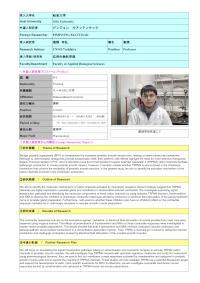
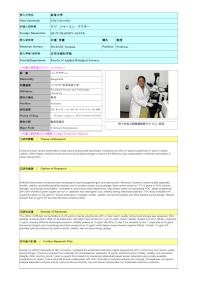
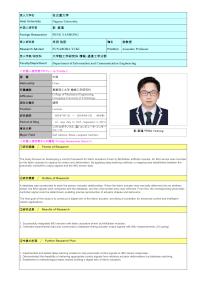
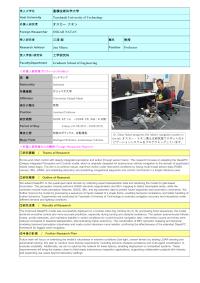
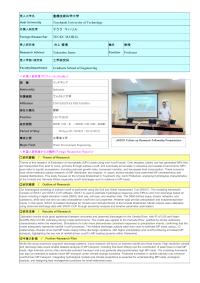
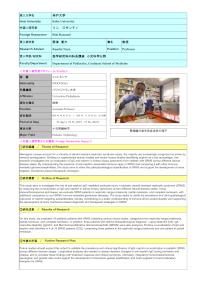
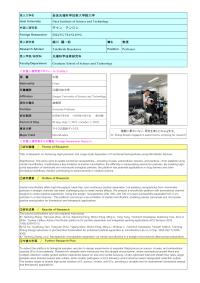
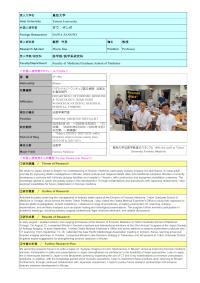
The 79th TIEC Research and Presentation | JASSO
.Date and Time 2. Venue 3. Program 4. Participants 5. Admission Fee 6. Language 7. Application The 79th Research and Presentation Poster This event is implemented for promoting interaction among participants and forming intellectual networks. In TIEC, there are a lot of international students and researchers from various countries and regions. This time, 4 TIEC residents introduced their study and research. Sunday, November 16th, 2025, 1:00pm~4:00pm 3rd floor Media Hall, Plaza Heisei, Tokyo International Exchange Center(TIEC), 2-2-1 Aomi, Koto-ku, Tokyo Access (1)Registration (2)Opening Remarks (3)Presentation and Q&A session
-
The 63rd Research and Presentation by TIEC Residents | JASSO
7. Language This event is implemented for promoting interaction among participants and forming intellectual networks. TIEC regidents introduced what they study at their university or institute through Poster Session and Oral Presentation. Saturday, April 20, 2019 10:30am-2:15pm (Door opens 10:30am) Media Hall, International Conference Hall and Main Foyer, Plaza Heisei 3F, Tokyo International Exchange Center (TIEC), 2-2-1 Aomi, Koto-ku, Tokyo 1. Registration (10:30am-) 2. Poster Session (10:30am-11:15am) at Media Hall (1) Man Ping Kwan (Hong Kong, Waseda University) “BI model - An Extension of Starobinsky model induced by SUGRA” (2)