Traffic Safety and Crime Prevention Seminar
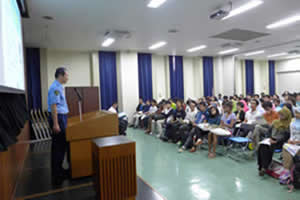
Every year, we conduct a traffic safety and crime prevention seminar for all new students.
This includes screening a DVD designed to prevent students from becoming involved in or causing crimes and traffic accidents in Japan. Additionally, officials from the Shinjuku Police Station provide lectures with specific examples related to traffic safety and crime prevention.
Students have shared feedback such as, "I learned about Japan's traffic rules" and "I want to be mindful of pedestrians and cars when riding a bicycle."
Through these workshops, we ensure students understand the important precautions necessary for living in Japan as international students.
We will continue to provide guidance on crime prevention, traffic safety, and aspects of daily life.
|
|
|
Club Activities
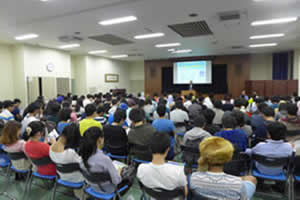
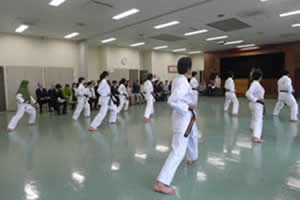
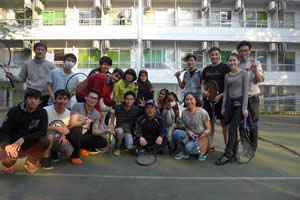
The Tokyo Japanese Language Education Center offers club activities to deepen understanding and interaction among students through experiences related to Japanese culture and sports. These activities take place on the center premises after school and are open to anyone interested.
|
|
|
Counseling
For current students, we offer weekly counseling sessions to address various concerns and issues that may arise during their study abroad experience.
Part-time Work
At the Tokyo Japanese Language Education Center, students are generally prohibited from engaging in part-time work.
However, students with economic necessity may be allowed to work part-time under specific conditions: students enrolled in the April intake (one-year course) may begin in July, and those in the October intake (one-and-a-half-year course) may start the following January.
Students must obtain permission from the center and then receive a "Permission for Activities Outside the Scope of Status" from the Tokyo Immigration Bureau to commence part-time work.
Students with attendance or academic issues cannot apply for work permission.
The procedure for applying for permission for activities outside the scope of status is as follows:
- 1.Consult with your homeroom teacher and apply at the center.
- 2.Obtain approval from the center director.
- 3.Receive the application approval form from the student affairs division.
- 4.Make an application form for the immigration bureau and bring the application form, passport, residence card, and student ID to the immigration office.
- 5.After receiving notification from the immigration bureau (approximately two weeks later), receive the "Permission for Activities Outside the Scope of Status."
- 6.Submit a copy of the permission to the student affairs division.
- 7.Once a part-time job is secured, submit the activity notification form to the school.
Permitted working hours for students with approval are up to 28 hours per week when classes are in session, and up to 8 hours per day (40 hours per week) during spring, summer or winter vacation.
In the following circumstances, even if a student has good attendance and grades at a Japanese language school, they may face penalties for illegal employment, potentially ending their study in Japan:
- If a student without permission is working part-time.
- If a student works beyond the allowed hours.
- If a student works at establishments engaged in adult entertainment or related businesses.
Adult entertainment and related businesses include:
- Establishments such as cabarets, bars, nightclubs, snacks, mahjong parlors, pachinko parlors, game centers, and love hotels that entertain guests with food and drink.
- Cafes and restaurants with very dim lighting (10 lux or less).
Note1: Part-time work at adult entertainment or related businesses, including dishwashing, cleaning, or distributing promotional tissues on the street, is not permitted.
Note2: Even if you have obtained "Permission for Activities Outside the Scope of Status" with your residence card, you must always obtain work permission from the school and report your workplace information when engaging in part-time work.